Decluttering and mapping in ggplot
Agenda
1
Narrative Models
2
Examples
3
Your Turn
Narrative Models
Narrative Models in the Business context
Using a conscious narrative structure adds quite a bit to your communication
embeds in memory
builds energy
We’ve introduced narrative models before and have said there are tons
- you should absolutely take a creative fiction/non-fiction course!
A possible model
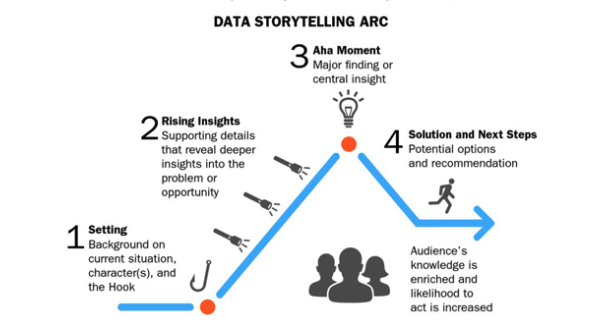
Steps to building the arc
The big idea (the “ah-ha” moment)
The tension ignited by the hook
Finding the rising insights
Solution and next steps
Example: Product Pricing
Progression
Set the plot
Tension built when products C,D,E significantly undercut existing price points at their launches
Restored a sense of balance when prices converged
End with a rec for pricing
All with a single visual
Another Example: Back to school shopping
Scenario
You are an analyst working at a national retailer.
You’ve just conducted a survey from the recent back-to-school shopping season.
people enjoy the overall experience of shopping in your store and they have positive brand association.
but inconsistencies in the service levels that customers are reporting across your stores.
Your team has brainstormed solutions to this and wants to put forth a specific recommendation to the Head of Retail: sales associate training should be developed and rolled out to create shared understanding of what good service looks like to provide consistent exemplary customer service.
Example: Back to school opportunity, Audience
Audience
- the executive team, the head of retail
- they care about having a profitable back to school shopping season, making customers happy, and beating competition
- they need to agree that training is the right way to deal with inconsistent service, and approve the resources to train
Example: Back to school opportunity, At Stake
What is at stake?
benefits include better service levels and happier customers, repeat visits and new customers
risks of no action could be bad word-of-mouth, losing to competitors, lost revenue
Example: Back to school opportunity, Big Idea
Form your big idea
- Let’s invest in sales associate training to improve the in-store shopping experience and make the upcoming back-to-school season the best revenue generating one yet
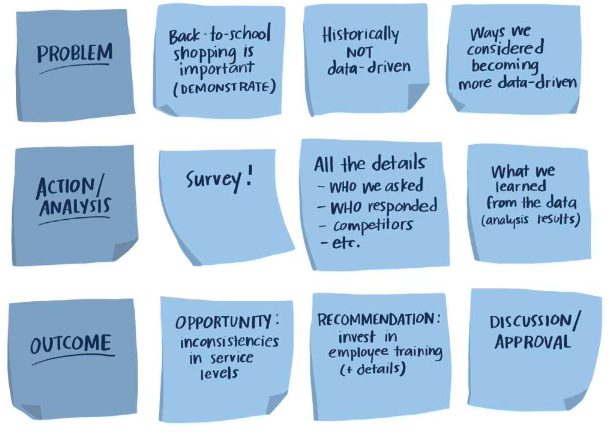
Topics to include?
Historical context
Problem we are trying to solve (maybe not data driven in the past?)
Different ways we thought about solving the problem
Course of action we undertook: survey
Survey customer groups
Survey details on competitors
Survey questions saked, dates
Data: how our store compares
Data: how this breaks down across stores and regions
Good news: where we are doing best
Bad news: where we are doing worse
Areas for improvement
Potential remedies
Reccomended investment in sales training
Resources needed
What this will solve
Project timeline
Discussions to have
Storyboard
Points of tension?
what are the points of tension here?
clearly the inconsistency in service levels
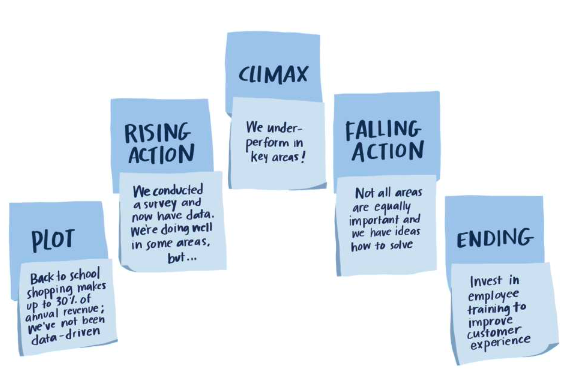
but how would we fit this into a narrative arc?
Putting into an arc
Putting it together
we’ve got a sense of the story
we know we need to walk them through the story in a meeting - what tools will we use?
what about after the meeting?
Your turn
Your turn
Your group should produce:
big idea
key elements/storyboard
A potential narrative arc
- hook
- rising action
- ah-ha
- declining action
- resolution

Econ 255 - Data Storytelling